Meeting energy demand in the Okanagan
Our project is about addressing the growing demand for gas in one of the fastest-growing regions in British Columbia. Right now, we deliver gas to approximately 110,000 customers in the Okanagan region. Population is projected to increase by 9.3% between 2025-26 and 2030-311. That’s an extra 24,000 people. Many of them will need a supply of gas to heat their homes and run their appliances.
Connecting with the community to keep their needs in mind are vital factors as we plan our project. Senior project manager at FortisBC, Darren McElhinney explains how valuable public feedback has been for the project so far and what some of the main factors are in being ready for changing conditions in the next few years.
“We want to make sure the Okanagan has a reliable supply of gas to meet their energy needs, especially in the winter,” Darren said. “We also value the perspectives of the people who live and work in the region. As we prepare to meet peak demand on the coldest days of the year, we’ve factored community input into our site design.”
We've worked closely with the City of Kelowna to keep them informed throughout the planning process for the site design that community feedback helped to define.
“We appreciate FortisBC’s commitment to listening to our community and adapting the project to reflect local priorities as our city continues to grow,” Ryan Smith, divisional director, planning and development services at the City of Kelowna said. “The project design shows a strong focus on safety, screening elements, and long-term reliability for residents and businesses in Kelowna. We value the collaborative approach FortisBC has taken to make this project work for our community.”
Details of our project
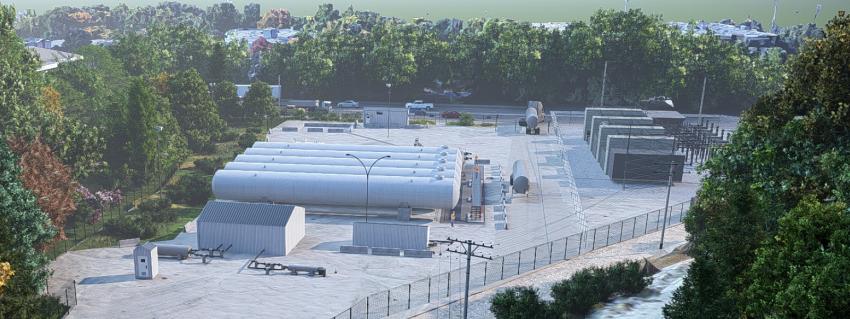
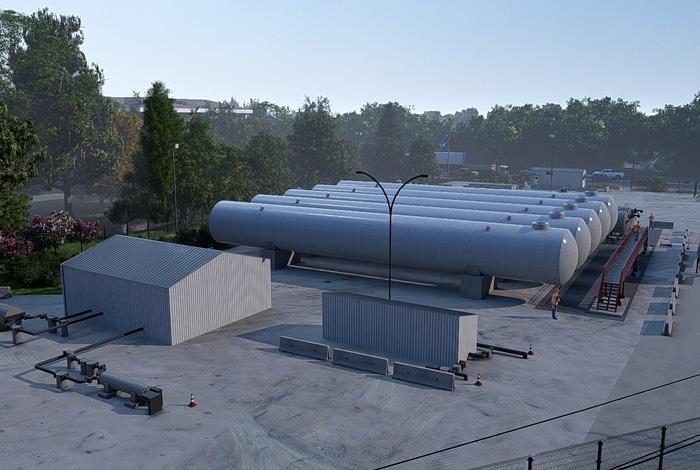
We’re building a small-scale liquefied natural gas (LNG) storage and send-out facility along Spall Road in Kelowna next to an existing substation on land owned by FortisBC. The facility will be a key site to provide the region with a reliable supply of LNG which can then be regasified during winter months when people need it most. No LNG production will happen at the site, and the tanks are likely to be empty for most of the year.
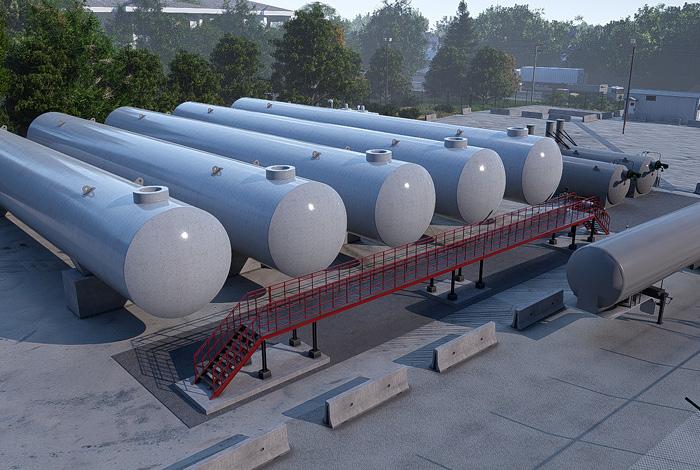
In the first phase of the project, we’ll have three mobile tankers onsite with a mobile onsite storage vaporizer. For the project’s second and final phase which we expect to begin this year in 2026, we’ll install five prefabricated tanks to increase the site’s storage capacity and the necessary equipment to inject LNG into the system. This will help meet rising energy demand in the region during the coldest times of the year when demand for energy is highest.
Each fall, up to 30 LNG tanker truckloads will be transported from our Tilbury facility in Delta, B.C., to Kelowna to gradually fill the tanks in preparation for the winter months. Site preparation for this phase will begin in spring 2026 to become operational by the end of the year and into 2027.
Responding to permitting requirements and community feedback
After the BCUC approved our project in March of 2025, we began detailed engineering work to adapt our plan. Taking regulations and permitting into account is important to the success of our projects. On design and technical levels, we followed strict permitting and code requirements as we conducted a comprehensive risk analysis.
This meant:
- reassessing the boundaries between our site and other lots
- reducing the number of tanks in the project’s second phase from six to five
- revising the way the tanks are arranged
- redesigning tank pumps and the way they’re emptied
Adapting the project to suit the unique needs of the community went beyond just permitting and regulatory requirements. We’ve gained a greater understanding of what people who live and work in Kelowna think of the project through discussions in an open house forum.
Community & Indigenous relations liaison at FortisBC, Adrianna Tournat, talked about what was most important to community members and leadership in the Okanagan during these sessions.
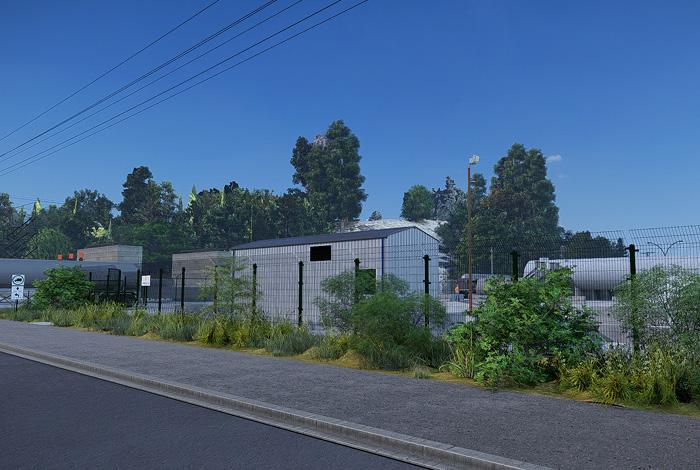
“We heard feedback from the public about the look of these tanks and the site being in a central location. This played a part in our decision to rearrange the tanks, change their layout, and move them further away from the road. We also took time to answer questions about LNG to help people understand what it is and how we manage it safely. These were important and constructive conversations to have.”
Community engagement continues
As we move forward, we’re keeping the focus on what communities in the Okanagan like Lake Country, West Kelowna, Peachland and others will need when weather gets colder. Working out logistical details to make sure we meet growing energy demand in the region is a big part of that, as is listening to what community leaders and residents are saying as conditions change and needs evolve.
“Great communication is key and we’re grateful to everyone in the community who’s contributed to the conversation so far,” Darren said. “As we focus on good data that drives supply and demand projections, the central goal is always to provide comfort and safety. The people who live and work here in the Okanagan help us focus on what the region’s needs are today and what they’ll be in the next few years.”
To learn more about our project, visit the Okanagan Capacity Mitigation Project page. To receive project information and construction updates, sign up for our Talking Energy newsletter subscription.
1Government of British Columbia’s Population Estimates and Projections